
The Temple
Bhramaramba Devi Temple at Srisailam, Andhra Pradesh, holds a unique distinction in all of India — it is the ONLY place where a Jyotirlinga (Mallikarjuna Shiva) and a Shakti Peetha (Bhramaramba Devi) exist on the same hill, within the same temple complex. Srisailam is supremely sacred to Telugus — visiting Srisailam means receiving the combined blessings of both Shiva (Mallikarjuna) and Shakti (Bhramaramba) together. In the Dvaita Vedanta tradition, Shiva and Shakti are inseparable — and nowhere is this more literally true than at Srisailam. "Bhramaramba" means "the beautiful one who took the form of bees" (Bhramara = bee). The Goddess manifested as a swarm of bees (Bhramari) to destroy the demon Arunasura who had cursed all limbed beings. A swarm of bees has no limbs — so she bypassed the curse and destroyed the demon.

The Sacred Story

Where the Goddess appeared as a swarm of bees to slay demon Arunasura — the sacred hill of Srisailam
The Epic Legend of Bhramaramba Devi: The Goddess of Bees
Bhramaramba Devi is one of the most unique forms of the Goddess, demonstrating divine ingenuity to bypass a demon's invincibility.
Part 1: Mythological Origins (Sati's Neck)
1. The Fall of Sati's Neck (Griva)
According to the foundational legend of the Shakti Peethas, when Lord Shiva wandered the universe in inconsolable grief carrying the burnt body of Goddess Sati, Lord Vishnu used his Sudarshana Chakra to dismember her body. This was done to relieve Shiva of his sorrow and restore universal balance.
It is believed that Sati's neck (griva) fell exactly upon the Srisailam hill in the dense Nallamala forests. What makes this location geologically and spiritually astonishing is that Lord Shiva had also arrived at this same hill (as Mallikarjuna) searching for his son, Lord Kartikeya. Thus, the divine coincidence of Shiva arriving here and Sati's neck falling here created the only place in India where a Jyotirlinga and a Maha Shakti Peetha share the very same hallowed ground.
2. The Demon Arunasura's 'Curse-Proof' Boon
The name "Bhramaramba" translates to "Mother of Bees" (Bhramara = bee, Amba = mother). This unique manifestation occurred because of a terrifying demon named Arunasura.
Arunasura had performed unimaginably severe penances to appease Lord Brahma. When Brahma appeared, the demon asked for a highly specific boon of invincibility: “I must not be killed by any two-legged winged creature, nor any four-legged creature, nor any human, nor any god.” Secure in his 'foolproof' boon, Arunasura unleashed an era of unprecedented terror, plunging the three worlds into chaos.
3. The Swarm of Divine Retribution
Desperate, the gods approached the Supreme Goddess (Adi Parashakti). The Goddess analyzed the exact wording of Arunasura's boon. While he had protected himself against two-legged and four-legged beings, he had completely forgotten about insects, which have six legs.
To bypass the boon, the Goddess transformed herself into a colossal swarm of massive, furious black bees. This terrifying and magnificent form—thousands of stinging bees—swarmed the demon from all directions. Since bees have six legs, the boon did not protect him, and the Bhramari Devi (Bee Goddess) stung the demon to death, restoring peace to the cosmos.
4. The Supreme Double Merit
Because Srisailam houses both Mallikarjuna (the 2nd Jyotirlinga) and Bhramaramba (an Ashtadasha Shakti Peetha), ancient scriptures declare that a single devout visit here grants the combined spiritual merit of visiting all 12 Jyotirlingas and all 18 major Shakti Peethas simultaneously.
Timeless Architecture
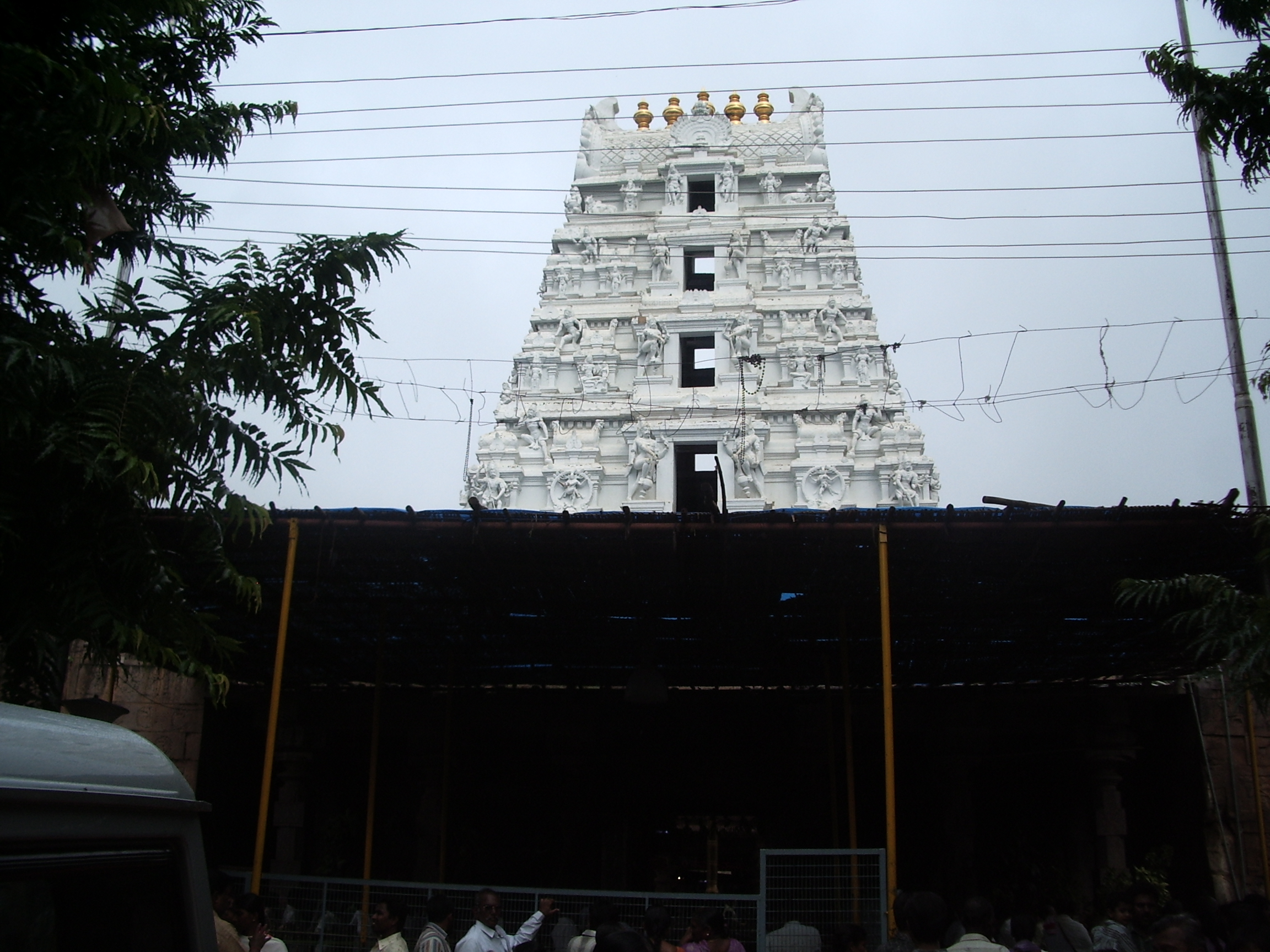
Bhramaramba Temple Construction: A Fortress in the Forest
The Srisailam complex is not just a temple; it is a sprawling, fortress-like sanctuary hidden deep within the Nallamala forests.
1. Ancient Inscriptions
The antiquity of Srisailam is awe-inspiring. Historical epigraphs and inscriptions found here date back to the 2nd century BCE (Satavahana era). Over the millennia, successive empires—the Pallavas, the Chalukyas, the Kakatiyas, and the Reddy Kings—all expanded and enriched the dual shrines of Shiva and Shakti.
2. The Vijayanagara Golden Age
The temple complex reached its zenith of architectural glory and wealth during the Vijayanagara Empire (14th–16th centuries CE). The legendary Emperor Krishnadevaraya was deeply devoted to Mallikarjuna and Bhramaramba. Following his victorious military campaigns, he constructed magnificent gopurams (towers), the beautiful Mukha Mandapam (front hall), and donated staggering amounts of gold and jewels to the Goddess.
3. Chhatrapati Shivaji's Devotion
In the 17th century, the great Maratha warrior king Chhatrapati Shivaji deeply venerated Goddess Bhramaramba. Recognizing the strategic and spiritual importance of Srisailam, he ordered the construction of a majestic gopuram and a protective fortified wall around the temple complex, which still stands today. Locals believe the Goddess herself blessed Shivaji with a legendary sword (the 'Bhavani Talwar') to protect Dharma.
4. The Nallamala Forest Setting
Nestled in the deep, undulating Nallamala Hills along the banks of the Krishna River (known here as Patalaganga), the journey to the temple involves traversing winding ghat roads through dense, pristine tiger reserves. This dramatic, isolated setting adds a profound sense of adventure and mystery to the pilgrimage.
Revealing the Mysteries
Discover the fascinating secrets and divine phenomena of this sacred temple
Unprecedented Co-location: Srisailam is the only place in India where a Jyotirlinga (Mallikarjuna) and a major Shakti Peetha (Bhramaramba) coexist on the exact same hill.
The Bee Goddess: The Goddess is named 'Bhramaramba' because she took the incredible form of a swarm of black bees (Bhramara) to bypass a demon's boon and sting him to death.
Sati's Neck: It is one of the revered Ashtadasha (18) Shakti Peethas; it marks the sacred spot where the neck (griva) of Goddess Sati is believed to have fallen.
Double the Merit: According to the Skanda Purana, a single darshan of the Srisailam deities grants the combined spiritual merit of visiting all 12 Jyotirlingas and all 18 Shakti Peethas.
Chhatrapati Shivaji's Gopuram: The great Maratha warrior Chhatrapati Shivaji Maharaj was an ardent devotee; he built the towering northern gopuram and fortified the temple walls in the 17th century.
The Nallamala Tiger Reserve: The temple sits deep within the sprawling Nagarjunasagar-Srisailam Tiger Reserve, making the journey through the forested ghat roads a breathtaking experience.
Telugu Spiritual Heart: For the Telugu-speaking people, Srisailam holds unparalleled emotional and spiritual significance as their premier unified Shiva-Shakti pilgrimage.
✨ Each mystery reveals the divine presence within these sacred walls ✨
Explore More Sacred Stories
Discover the legends and mysteries of India's ancient temples
View All Stories