
The Temple
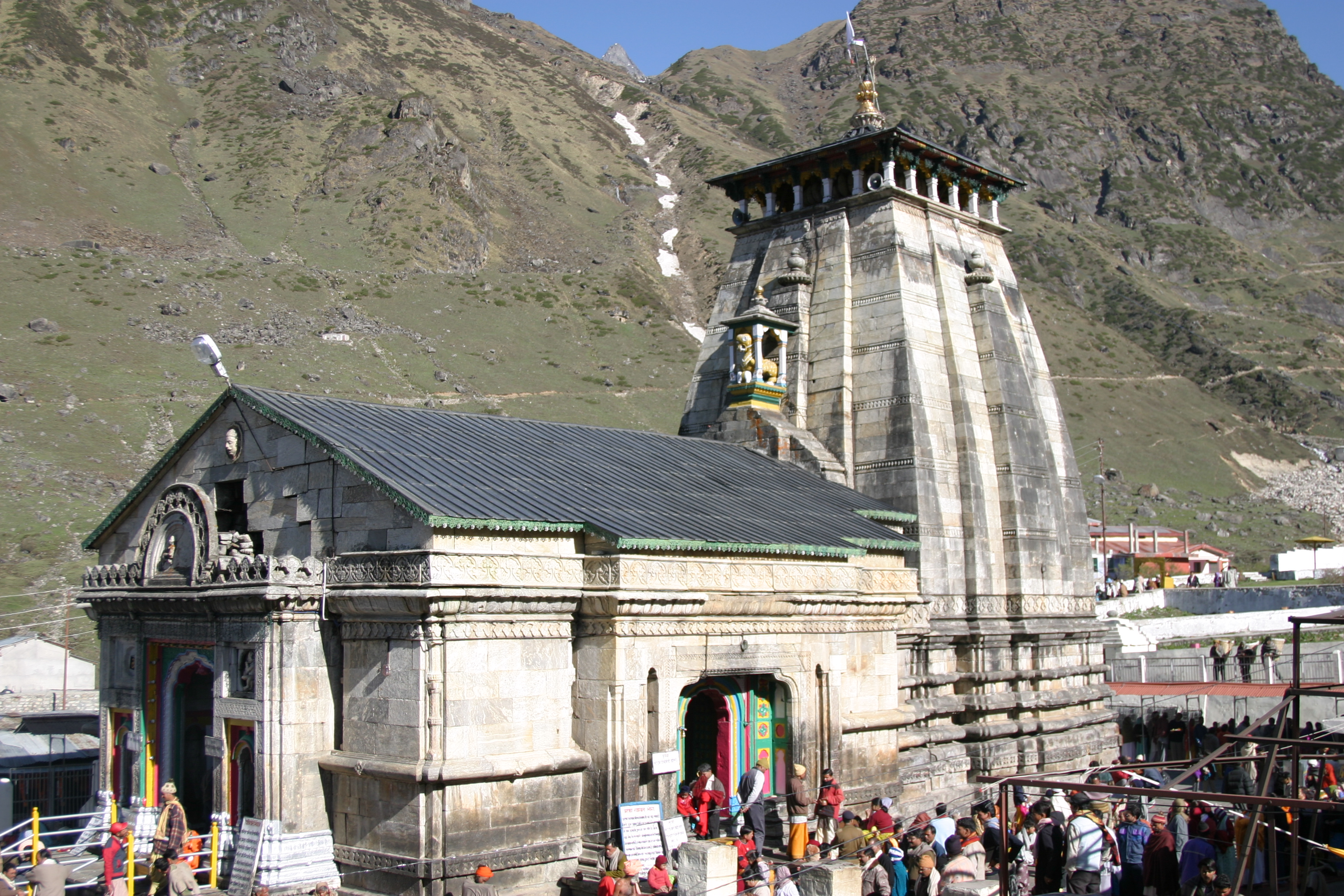
Kedarnath Temple stands at an altitude of 3,583 metres (11,755 feet) above sea level in the Garhwal Himalayas, Uttarakhand. Surrounded by snow-capped peaks and glaciers, it is the most dramatically located of all 12 Jyotirlingas. The temple is closed for 6 months every winter (November to April) under deep snow. When the temple closes, the priests perform a final ritual lighting a lamp that symbolically continues to burn through winter — and when they return in May, the lamp is supposedly still burning. The Shiva Lingam here is NOT a conventional cylindrical Lingam — it is a massive irregular triangular rock (dhoop), believed to be the hump of a buffalo/bull that Lord Shiva became while trying to elude the Pandavas.
The Sacred Story

At 3,583 metres above the clouds — Shiva's high Himalayan refuge built by the Pandavas
The Epic Legend of Kedarnath: The Hump of the Divine Bull
At 12,000 feet in the Himalayas, snowbound for 6 months every year — Kedarnath is the most dramatic of all 12 Jyotirlingas.
Part 1: Mythological Events (The Guilt of the Pandavas)
1. The Guilt of the Pandavas
Following the devastating Kurukshetra war described in the Mahabharata, the Pandavas emerged victorious but were consumed by profound grief and guilt. They had committed 'Gotra-hatya' and 'Brahma-hatya'—the grievous sins of killing their own kin, elders, and venerated teachers like Drona and Bhishma.
Seeking absolution, they were advised by Sage Vyasa to seek the blessings and forgiveness of Lord Shiva. The brothers traveled to Kashi (Varanasi), Shiva's favorite city, but the Lord, deeply displeased with the deceit and bloodshed of the war, refused to grant them an audience. He deliberately eluded them and retreated to the freezing, inaccessible peaks of the Garhwal Himalayas.
2. Shiva Disguises as a Bull
Undeterred, the Pandavas journeyed into the treacherous Himalayan valleys. When they reached the Guptakashi region, Lord Shiva disguised himself as a massive bull (Nandi) and mixed with a herd of cattle grazing in the high-altitude meadows.
Bhima, the strongest of the Pandava brothers, devised a plan to identify the Lord. He stood with his giant legs spread across two separate mountain peaks over a narrow valley. All the cattle passed safely underneath him, except for one magnificent bull, which refused to go under a mortal's legs. Realizing this was Shiva, Bhima immediately pounced to capture him.
3. The Diving Bull and the Panch Kedar
As Bhima lunged, the mighty bull dove face-first into the earth to disappear. Bhima managed to grab only the bull's hump from behind. Touched by their fierce determination and unwavering devotion, Lord Shiva finally forgave the Pandavas and manifested his divine presence permanently in the ground as that very hump.
This is the ultimate reason why the presiding Lingam at Kedarnath is not a traditional cylindrical shape, but rather a massive, naturally formed triangular rock resembling the hump of a bull.
The other parts of the divine bull emerged at four different locations across the Himalayas, collectively forming the revered "Panch Kedar" (Five Kedars). The arms appeared at Tungnath, the face at Rudranath, the navel at Madhyamaheshwar, and the matted hair at Kalpeshwar.
4. Adi Shankaracharya's Final Journey
Centuries later, the 8th-century philosopher-saint Adi Shankaracharya trekked to these perilous heights to revive the Kedarnath temple and formally establish the Char Dham pilgrimage circuit. Having completed his life's monumental mission of reviving Sanatana Dharma, he took his Mahasamadhi (conscious exit from the physical body) right behind the Kedarnath temple at the young age of 32.
Timeless Architecture

Kedarnath Construction History: The Unconquerable Himalayan Fortress
1. The Original Pandava Temple
The original temple foundation is attributed to the Pandavas themselves, who built it in gratitude after being absolved of their sins. According to legend, they used massive blocks of grey stone to construct a shrine around the triangular Jyotirlinga.
2. The 8th Century Reconstruction
The current imposing stone structure—built with massive, evenly cut grey stone slabs featuring interlocking joints without mortar—was constructed by Adi Shankaracharya in the 8th century CE. The architectural brilliance of this dry-masonry technique is what allows the temple to withstand shifting tectonic plates and heavy snow pressure. For over 1,200 years, it has survived the extreme, punishing Himalayan winters.
3. The Miracle of Bhim Shila (2013)
During the catastrophic June 2013 North Indian floods, the entire Kedarnath valley and surrounding town were effectively obliterated by a massive surge of water, glacial debris, and boulders from the Chorabari Tal above. Yet, the main temple survived the apocalypse entirely unscathed.
Eyewitnesses and subsequent investigations revealed a 'miracle': a gigantic boulder washed down by the violent floods came rolling toward the temple but stopped exactly a few feet behind the back wall. This rock, now universally revered as the "Bhim Shila," acted as a massive wedge, miraculously diverting the roaring multi-story wall of floodwater and debris into two streams that flowed around either side of the temple, saving the ancient 1,200-year-old structure.
Revealing the Mysteries
Discover the fascinating secrets and divine phenomena of this sacred temple
Unique Lingam Shape: Unlike traditional cylindrical Lingams, the Kedarnath Jyotirlinga is a massive, naturally formed triangular rock, physically worshipped as the hump of the divine bull. Devotees embrace it during their prayers.
The Six-Month Deep Sleep: Due to extremely heavy snowfall, the temple is completely closed for 6 months (Nov to Apr). The temple deity is physically relocated to Ukhimath for winter worship.
The Akhand Jyoti Mystery: Before closing the heavy wooden doors for winter, priests light an oil lamp inside the sanctum. According to tradition, when the doors are unlocked 6 months later, the lamp is found still burning brightly in the freezing darkness.
The Panch Kedar: Kedarnath is the principal shrine of the Panch Kedar. The other four are Tungnath (arms), Rudranath (face), Madhyamaheshwar (navel), and Kalpeshwar (hair).
The Miracle Rock: The 'Bhim Shila' rests directly behind the temple today—the exact massive boulder that diverted the deadly 2013 floodwaters and saved the ancient structure from annihilation.
Highest Jyotirlinga: Sitting at a daunting 3,583 meters (11,755 ft) amidst the majestic Kedar Dome peaks, it is the highest of the 12 Jyotirlingas, historically accessible only by a grueling 16 km uphill trek.
✨ Each mystery reveals the divine presence within these sacred walls ✨
Explore All 12 Jyotirlingas
Twelve temples of divine light, spread across India — each a self-manifested Shiva Lingam.




← Swipe to see more →
Explore More Sacred Stories
Discover the legends and mysteries of India's ancient temples
View All Stories