
The Temple
Known as the "Southern Kailash" (Dakshina Kailasam), Srikalahasti Temple stands majestically on the banks of the sacred Swarnamukhi River in Chittoor district, Andhra Pradesh. Here, Lord Shiva is worshipped as Srikalahasteeswara and the Goddess as Jnanaprasunamba (the Mother who bestows wisdom). The temple's name is a unique combination of three creatures - Sri (Spider), Kala (Snake), and Hasti (Elephant) - who worshipped Lord Shiva with pure devotion and attained liberation. A miraculous phenomenon occurs in the inner sanctum: despite no wind being able to enter the sealed chamber, the lamp beside the Shiva Lingam constantly flickers and sways, as if moved by an invisible breath. This is considered living proof that Lord Vayu (the Wind God) eternally serves Shiva here.

The Sacred Story

Where the unseen Vayu Lingam shivers in the eternal wind — the air element shrine of Srikalahasti
The Complete History of Srikalahasti Temple
Long ago, according to our ancient Puranas, a great dispute arose between Vayu (the Wind God) and Adishesha (the serpent upon whom Lord Vishnu rests). The question was simple yet profound: "Who among us is the mightier?" This seemingly minor dispute escalated into a storm that would give birth to one of the holiest shrines in India.
THE MERU MOUNTAIN CHALLENGE - Birth of Dakshina Kailasa
Adishesha coiled his thousand hoods tightly around Mount Meru and challenged Vayu: "If you have the strength, loosen my grip and move this mountain!" Vayu accepted and unleashed a terrible cyclone with his fierce power. The entire universe trembled under its force. Heeding the prayers of the Devas for world protection, Adishesha slightly loosened his grip.
Instantly, three peaks broke off from Mount Meru and fell to different places on Earth: • One fell at Srikalahasti (Andhra Pradesh) • The second fell at Tiruchirappalli (Tamil Nadu) • The third fell at Trincomalee (Sri Lanka)
The sacred fragment that fell at Srikalahasti is what we see today as the "Dakshina Kailasam" (Southern Kailash).
THE INSTALLATION OF THE VAYU LINGAM
Vayu was overcome with remorse for causing the sacred mountain to shatter. In repentance, he performed severe penance for thousands of years at Srikalahasti, meditating upon Lord Shiva. When Shiva finally appeared and offered him a boon, Vayu made a unique request: "Lord! I am formless (without physical body). I am the life-breath of all living beings. Therefore, please manifest yourself here in my form (as the Wind) as a Lingam to protect all the worlds."
This is why the Shiva Lingam here is known as the "Vayu Lingam" (Air Lingam). Even though no wind can enter the sealed inner sanctum, the lamp beside the Shiva Lingam constantly flickers and sways. This is living proof that Lord Vayu eternally serves Shiva here.
Behind this sacred place's name lies the wondrous devotion story of three speechless creatures (Sri, Kala, Hasti). The history of Bhakta Kannappa is also intertwined with this temple.
SRI-KALA-HASTI: THE LEGEND OF THREE CREATURES
The temple's name comes from the combination of three words: • Sri = Spider • Kala = Snake • Hasti = Elephant
These three creatures worshipped Lord Shiva with absolute purity and attained liberation (Moksha).
A) THE SPIDER'S DEVOTION (Sri): In the Krita Yuga, a spider wove an intricate web over the Shiva Lingam to protect it from sunlight and dust. To test its devotion, Shiva intensified the flame of the nearby lamp. Fearing its web would burn, the spider tried to swallow the flame and perished in the act. Shiva appeared and granted it liberation.
B) THE CONFLICT OF SNAKE AND ELEPHANT (Kala & Hasti): In a later age, a snake and an elephant both worshipped the same Lingam, but neither knew about the other.
• The Snake's Worship: Every day, the snake would bring precious gems and jewels from the netherworld and adorn the Lingam with them. • The Elephant's Worship: Every day, the elephant would bring water from the Swarnamukhi River in its trunk, bathe the Lingam, and worship it with Bilva leaves from the forest.
THE CONFLICT: When the elephant arrived, it would find gems on the Lingam. Thinking "someone has dirtied it with stones," the elephant would clear them away, wash the Lingam, and perform its worship. When the snake arrived, it would find its precious gems scattered and leaves (placed by the elephant) everywhere. "Someone has destroyed my worship!" the snake would fume. This happened daily until the snake's anger boiled over.
LIBERATION: One day, while the elephant was worshipping, the snake entered its trunk and released its venom. In agony, the elephant thrashed its trunk against the ground. In this battle, both the snake and elephant perished. Pleased with their pure devotion, Lord Shiva appeared and granted liberation to both. The Lingam was named "Srikalahasteeswara" after these three devoted creatures.
THE STORY OF BHAKTA KANNAPPA (Tinnadu)
The story of Bhakta Kannappa is one of the most touching tales in the history of Srikalahasti. Tinnadu (his original name) was a tribal hunter. One day, while hunting in the forest, he came upon the Shiva Lingam. The moment he saw it, due to the spiritual impressions from his past lives, an immense love for Shiva awakened within him.
KANNAPPA'S UNIQUE WORSHIP: He knew no scriptures or mantras—only love. • Fearing Shiva might be hungry, he would taste the meat from his hunt (to ensure it was good) and offer the best pieces to the Lingam. • Having no vessel for abhishekam (ritual bathing), he would fill his mouth with water and spray it upon the Lingam—this was his abhishekam. • He would adorn the Lingam with flowers kept in his turban.
SHIVA'S TEST: The temple priest was disgusted by this strange worship. Shiva decided to reveal Kannappa's greatness to him. One day, when Kannappa arrived, blood was flowing from one of the Lingam's eyes. Kannappa was distressed. He applied Ayurvedic herbs, but the bleeding wouldn't stop. Without a moment's hesitation, he plucked out his own eye with an arrow and placed it where Shiva's eye was bleeding. The bleeding stopped.
But immediately, blood began flowing from Shiva's second eye. Kannappa didn't flinch. He prepared to give his remaining eye. But then a doubt arose—if he removed his second eye, how would he see where to place it? So he put his big toe on the spot of Shiva's second eye as a marker and was about to pluck out his remaining eye.
Moved by his sacrifice, Lord Parameshwara appeared, crying out, "Stop, Kannappa! Stop, Kannappa!" He restored Kannappa's sight and granted him liberation. From that day, Tinnadu became immortalized as "Bhakta Kannappa" (Kannappa the Devotee).
THE STORY OF JNANAPRASUNAMBA
Once in Kailasha, while Shiva was explaining divine secrets in solitude, Goddess Parvati became distracted and inattentive. Angered, Shiva cursed her to take birth on Earth. To obtain redemption from this curse, the Goddess performed penance at Srikalahasti. Shiva then taught her the Panchakshari Mantra (the five-syllabled mantra). The Goddess became the presiding deity of all knowledge and wisdom. This is why the Goddess here is called "Jnanaprasunamba" (The Mother who bestows Wisdom). Her idol has a unique feature—a distinctive curve at the waist, unlike typical goddess statues.
Timeless Architecture
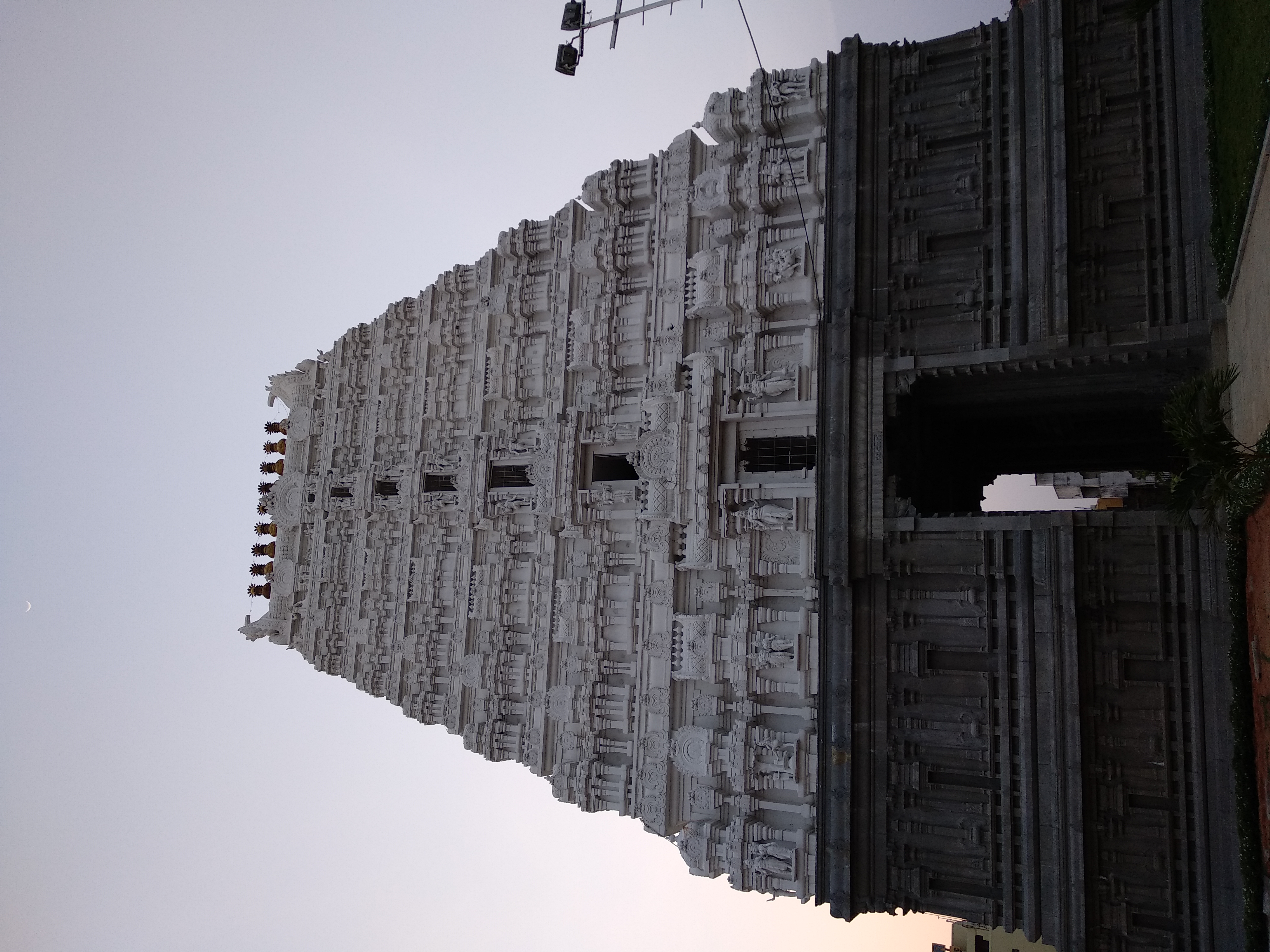
The history of Srikalahasti Temple is a tapestry woven by multiple dynasties. The inner sanctum was constructed during the Pallava period (5th century CE), while the Cholas (11th century) and Vijayanagara kings (16th century) further developed and expanded the temple complex.
THE 100-PILLARED HALL (Ekashila Mandapam): Inside the temple stands an architectural marvel—the 100-pillared hall. It is said that Emperor Sri Krishnadevaraya of the Vijayanagara dynasty had this entire structure carved from a single massive stone in 1516 AD.
The temple's architecture is remarkably intricate. When viewed from above (satellite or drone view), the entire temple complex resembles the shape of an elephant (Hasti)—a fitting tribute to one of the three creatures whose devotion named this sacred place.
Revealing the Mysteries
Discover the fascinating secrets and divine phenomena of this sacred temple
Open During Eclipses: While all temples across India close during solar and lunar eclipses, Srikalahasti is the only major temple that remains open. Rahu-Ketu pujas are performed here even during eclipses.
Elephant Shape from Above: When viewed from a satellite or drone perspective, the temple complex appears in the shape of an elephant—honoring the devoted Hasti from the temple's origin legend.
Navagraha Kavacham on the Lingam: Unlike other Shiva Lingams adorned with rudraksha or vibhuti, the Lingam here has a golden covering with the nine planets (Navagrahas) engraved on it. Worshipping here is believed to remove all planetary afflictions.
Patala Vinayaka: Deep underground within the temple premises resides Patala Vinayaka (the Underground Ganesha). Devotees must descend approximately 30 steps to reach this deity. It is believed that worshipping here removes all sins.
100-Pillared Hall from Single Stone: The 100-pillared mandapam inside the temple is an architectural wonder, reportedly carved from a single massive stone during the Vijayanagara period.
Priests Never Touch the Main Lingam: In all other Shiva temples, priests touch the Lingam during abhishekam. But here, even the head priests never touch the main Vayu Lingam. Abhishekam is performed only on the Utsava Murti (processional deity), while offerings are poured on the main Lingam from above, without touching it.
Dakshinamurthy Faces North: In typical Shiva temples, the Dakshinamurthy idol faces south (dakshina = south). Uniquely, at Srikalahasti, Dakshinamurthy faces north. This is an extremely rare occurrence.
Premier Sarpa Dosha Remedy: This is the most famous temple in all of India for Rahu-Ketu dosha and Kala Sarpa Dosha remedies. Devotees believe that performing pujas here removes obstacles related to marriage, children, and career.
✨ Each mystery reveals the divine presence within these sacred walls ✨
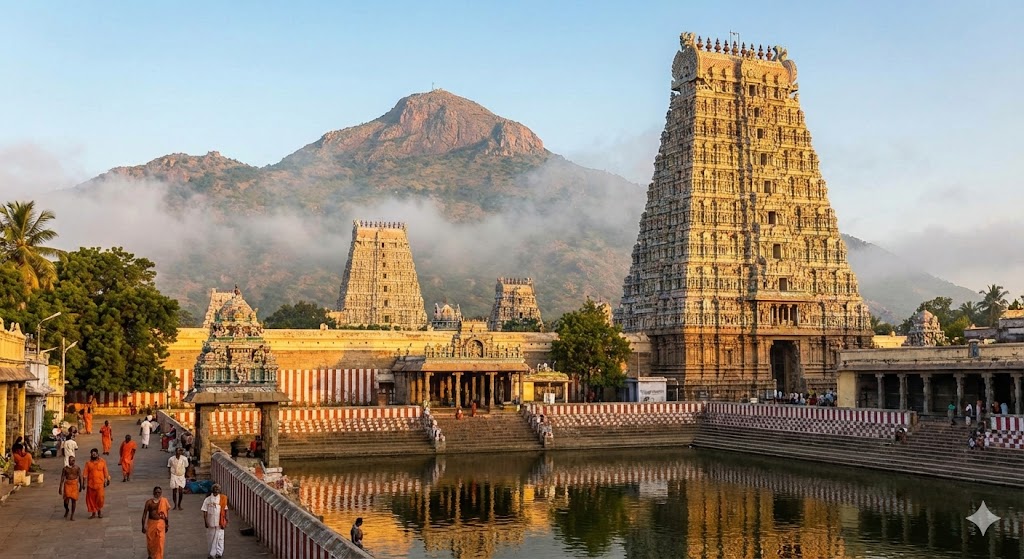
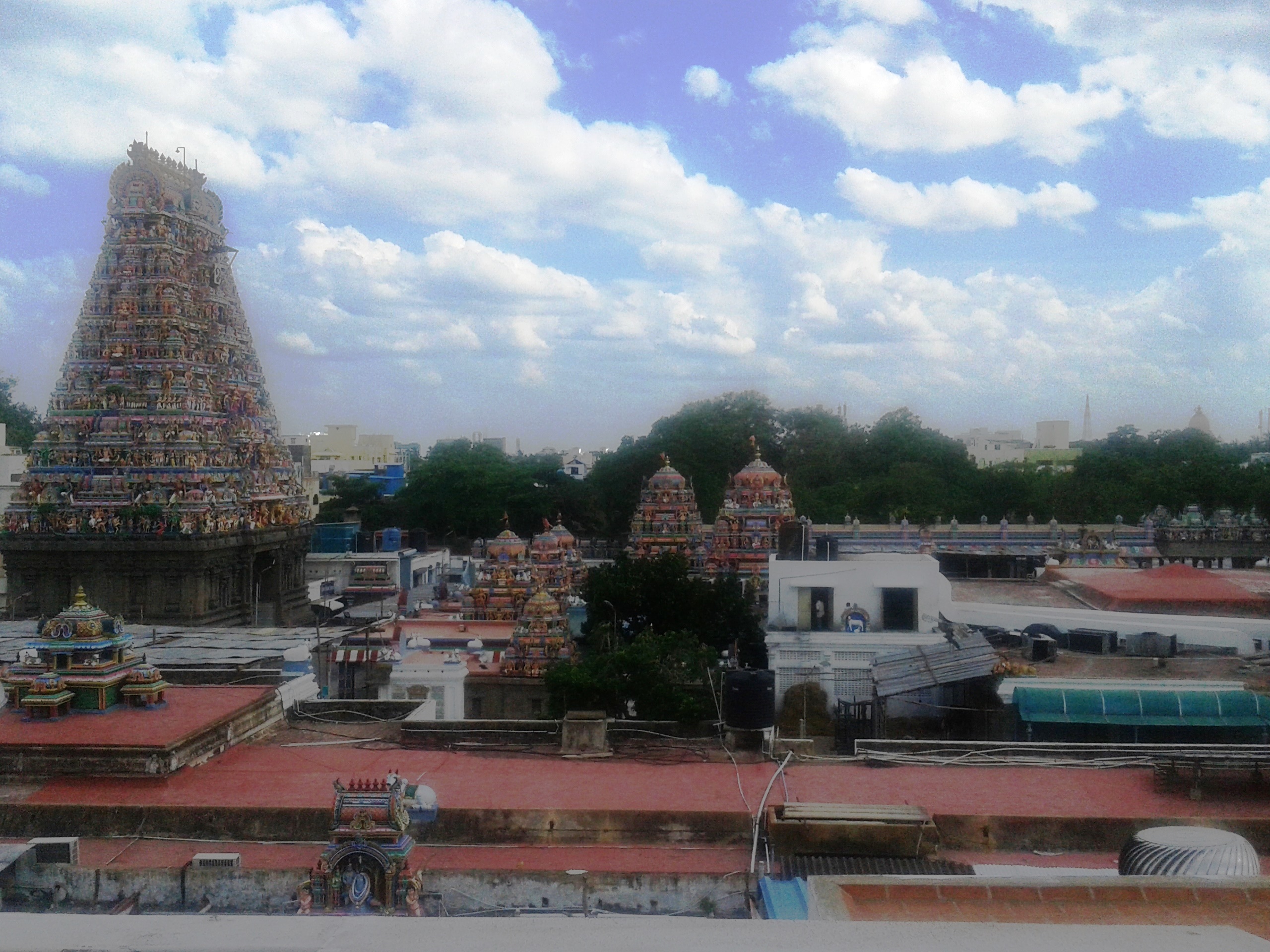
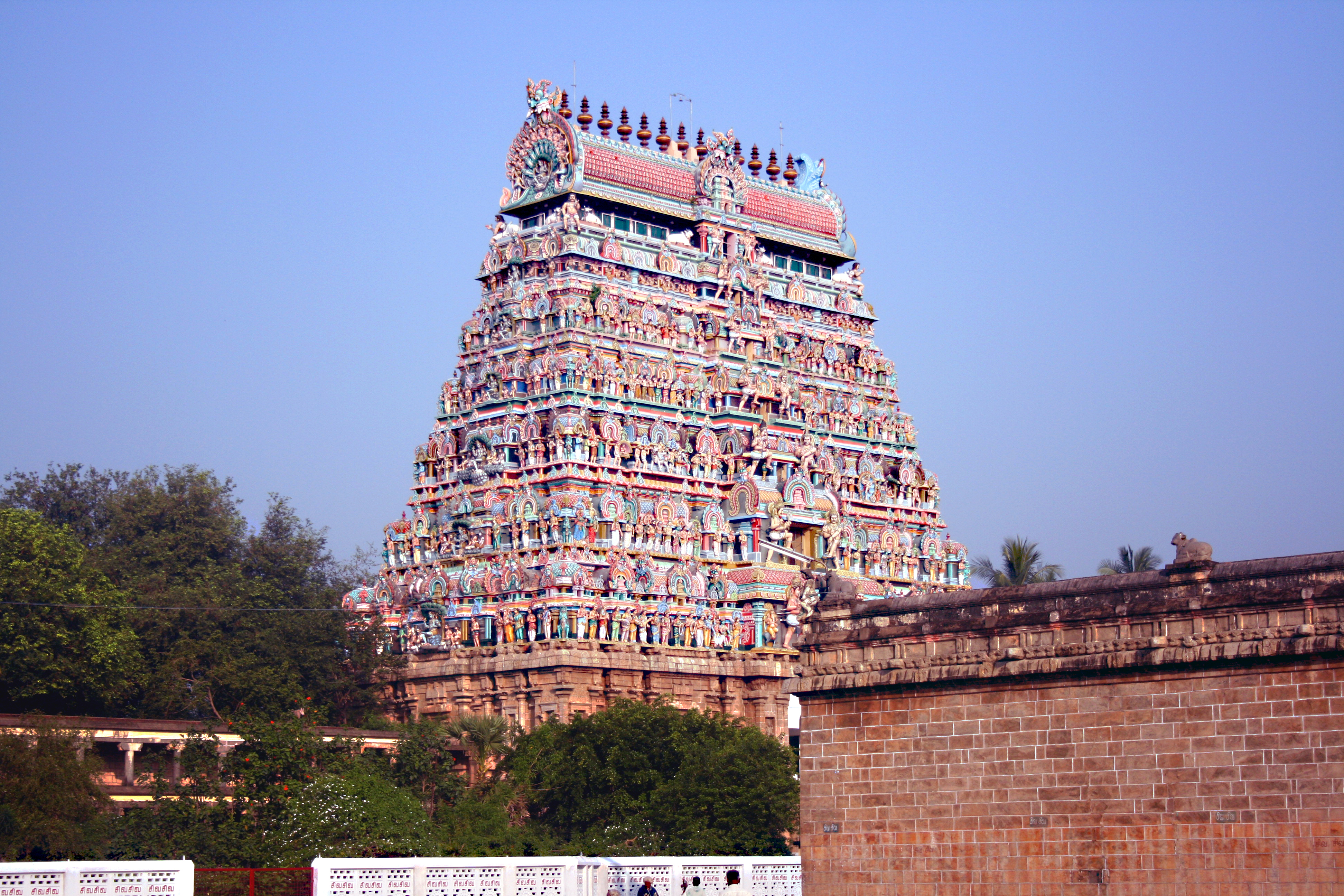
Complete the Pancha Lingalu Circuit
Each of the five Shiva temples embodies a different element of creation. Explore them all.

Complete Srikalahasti Temple Guides
Plan Your Visit
Temple timings, the flickering lamp phenomenon, underground Ganesha, and everything you need to know before visiting the Southern Kailash.
Rahu-Ketu Puja: The Complete Guide
Why Srikalahasti is India's premier temple for Rahu-Ketu dosha remedies, how the planets are worshipped here, what the puja involves, costs, and who should do it.
Walking in Kannappa's Footsteps
The complete story of Bhakta Kannappa who gave both his eyes to Lord Shiva — and a guide to experiencing his story in the temple landscape today.
Tirupati & Srikalahasti: A Sacred Circuit
These two great temples are only 40 km apart. A complete guide to combining Tirupati (Venkateshwara) and Srikalahasti in one pilgrimage — logistics, itinerary, and why they belong together.
Explore More Sacred Stories
Discover the legends and mysteries of India's ancient temples
View All Stories